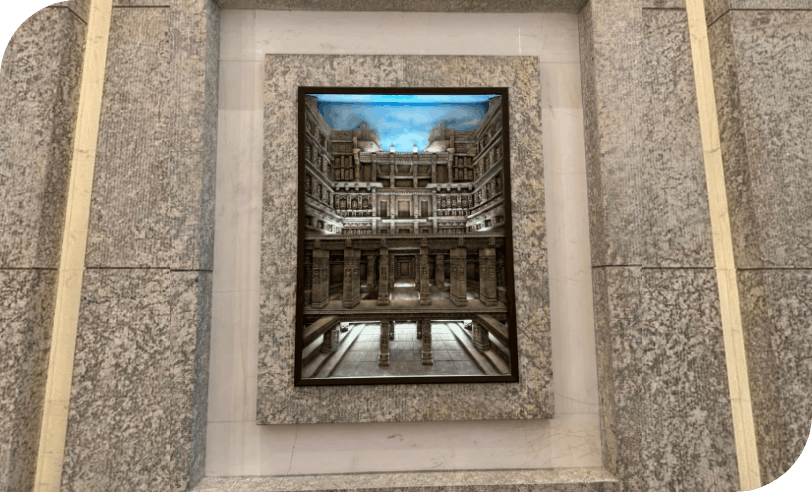
Rani Ki Vav
Patan, Gujarat, 11th Century CE
Rani ki Vav is an exceptional example of ancient Indian hydraulic architecture, conceived not merely as a water structure but as an inverted temple articulated along a deep subterranean axis. Architecturally, the stepwell follows a highly ordered, longitudinal plan with multiple descending levels, punctuated by pillared pavilions, terraces, and sculptural panels that guide movement and sightlines toward the water source.
From an engineering standpoint, the structure reflects advanced understanding of soil behavior, load transfer, and groundwater management. The stepped geometry ensures structural stability while resisting lateral earth pressure, and the precise stone masonry enables durability in a moisture-rich environment. Carefully calculated proportions, drainage paths, and ventilation allow the monument to remain structurally sound despite seasonal water fluctuations.
The precision-cut stone articulation serves both structural and aesthetic purposes, with load-bearing columns seamlessly integrated into richly carved surfaces. The stepwell’s orientation and depth demonstrate climatic sensitivity, providing thermal comfort and efficient water access throughout the year.
Rani ki Vav stands as a masterclass in sustainable engineering and architectural refinement—where hydraulic science, structural intelligence, and sculptural excellence converge to create a monument of enduring technical and cultural significance.